
Let me be honest with you—when patients ask me about composite veneers lasting five years, my answer isn’t always what they want to hear. After over 6 years in cosmetic dentistry, I’ve seen a handful of composite veneer cases, and the reality is more nuanced than most articles will tell you.
The Truth About Composite Veneers After 5 Years
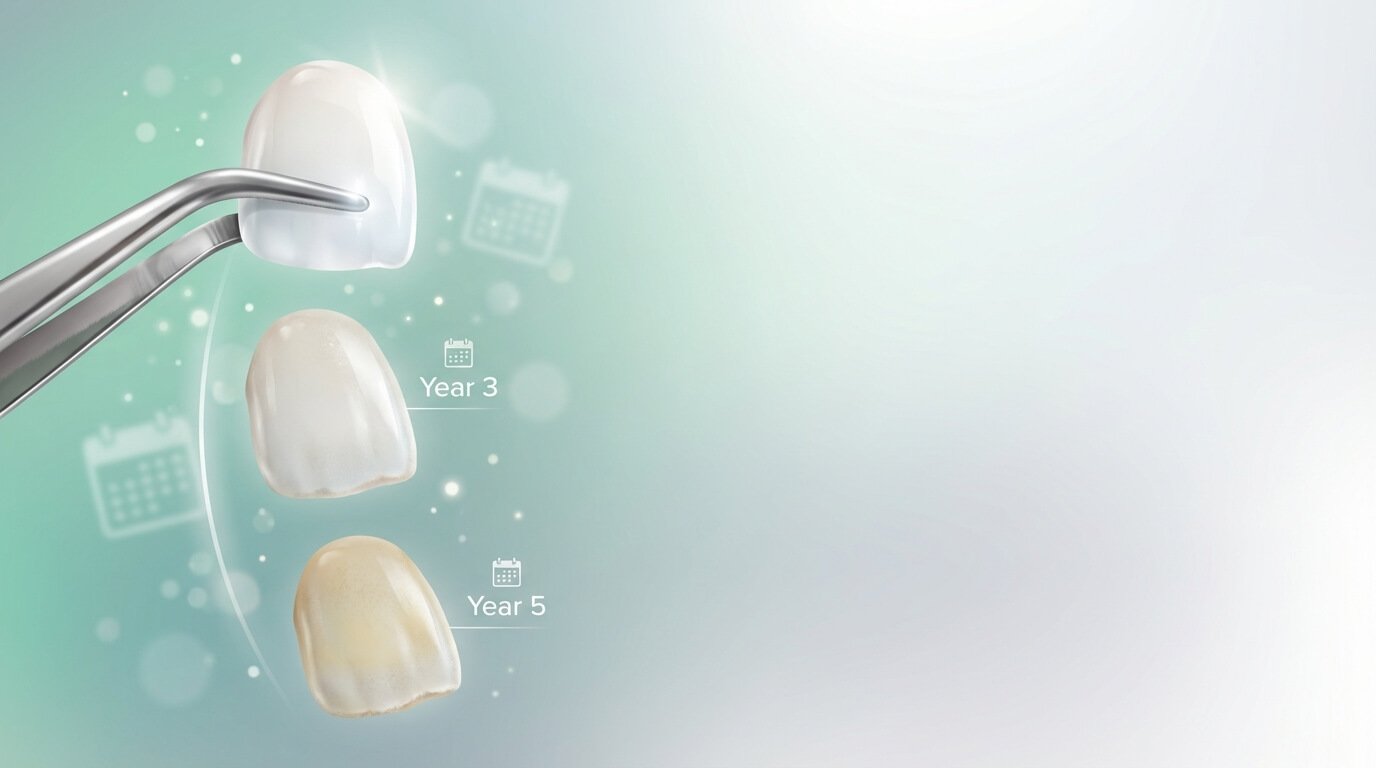
Here’s what actually happens to composite veneers after five years: they don’t suddenly fail, but they do show their age. Think of them like a car—after five years of daily use, they’re still functional, but they need more maintenance and don’t look quite as fresh as day one.
What I’ve Observed in My Practice
Most composite veneers I’ve placed show these common changes after five years:
Surface Changes: The polish diminishes noticeably. That glass-like shine? It becomes more matte, even with good care. This happens because composite resin is porous at a microscopic level—no matter how well you brush or how many cleanings you get.
Color Shifts: Coffee drinkers, I’m looking at you. Even patients who follow instructions religiously experience some discoloration. The edges tend to darken first, creating a subtle outline that wasn’t there initially.
Minor Chipping: Small chips at the edges are almost inevitable, especially if you’re a nail-biter, pen-chewer, or have grinding habits. These are usually repairable.
Wear Patterns: The biting surfaces show wear, particularly on front teeth that take a lot of stress. This can alter the original shape slightly.
📖 Readers Also Liked: The best countries for dental veneers
The Maintenance Reality Check

If you want your composite veneers to look decent after five years, here’s what you absolutely must do:
Professional polishing every 6 months: This isn’t optional. Think of it as detailing your car—it removes surface stains and restores some shine. At Professors Dental Clinic, we include detailed maintenance plans with every veneer case because we know this makes or breaks long-term results.
Avoid staining culprits: Red wine, coffee, tea, and smoking are the worst offenders. I tell my patients: if it stains a white shirt, it stains your veneers.
Gentle brushing technique: Aggressive brushing with abrasive toothpaste actually damages the resin faster. Use a soft brush and non-abrasive toothpaste.
Night guard if you grind: This single investment can double the lifespan of your veneers.
Our clinic has over 650 positive reviews on Google ⭐⭐⭐⭐⭐ You can send us a WhatsApp message to book a checkup or enquire about any of our dental services.
When Replacement Becomes Necessary
By year five, about 50% of my composite veneer patients are considering replacement or upgrading. Not because the veneers have failed catastrophically, but because:
- The aesthetic result no longer matches their expectations
- Staining has become too pronounced to polish out
- Multiple small repairs make the veneer look patchy
- They’re ready to invest in something more permanent
The Upgrade Conversation I Have Often
Around the five-year mark, I sit down with patients and have what I call “the upgrade talk.” Here’s what I explain:
Composite veneers are brilliant for immediate results at an accessible price point—about $85 per tooth in one session at our clinic. They’re perfect for trying out a new smile or addressing minor cosmetic issues quickly.
But if you’re looking at replacing them anyway after five years, the math changes. This is when many of my patients consider E.max veneers instead.
📖 Readers Also Liked: What is teeth shaving for veneers, and is it necessary?
Why E.max Makes Sense After Experiencing Composites

At Professors Dental Clinic, we use the original Swiss E.max® (not Chinese imitations), and here’s why this matters after you’ve had composite veneers:
Stain Resistance: E.max is essentially glass—it simply doesn’t stain like composite resin. That coffee you’ve been avoiding? No longer an issue.
Durability: With a 10-year warranty (compared to none on composites), you’re looking at potentially double the lifespan without the maintenance headaches.
Aesthetics: The translucency and light-handling properties of E.max create a more natural appearance that doesn’t dull over time.
Cost Per Year: At 7,500 EGP (about $159) per tooth with a 10-year warranty versus 3,000 EGP every 5 years for composite, the long-term cost difference isn’t as dramatic as you might think—especially when you factor in maintenance appointments.
We include a temporary prosthesis with E.max so you can test the shape and color before committing. With my Master’s degree in prosthodontics and cosmetic dentistry, I’ve learned that previewing the final result eliminates most post-treatment surprises.
Can You Extend Composite Veneer Lifespan Beyond 5 Years?
Absolutely. I have patients with 7-8 year old composite veneers that still look acceptable. Here’s their secret:
Fanatical oral hygiene: These patients brush gently after every meal and floss religiously.
Regular professional maintenance: They never miss their 6-month polishing appointments.
Lifestyle modifications: They use straws for staining beverages and quit smoking.
Immediate repair of chips: They don’t let small problems become big ones.
But honestly? They’re the exception, not the rule. Most people aren’t willing to be this disciplined, and that’s completely understandable.
My Professional Recommendation
If you’re approaching the 5-year mark with composite veneers, schedule a comprehensive evaluation. We need to check for:
- Marginal integrity (is the bond still solid?)
- Subsurface staining (discoloration you can’t see yet)
- Tooth structure underneath (any decay developing?)
- Overall aesthetic goals (are they still being met?)
This isn’t a sales pitch for replacement—sometimes, all you need is professional polishing and minor bonding touch-ups. But catching issues early prevents more expensive problems later.
The Bottom Line
Composite veneers after five years are like a smartphone after five years—still functional, but showing their age, requiring more maintenance, and probably not performing at the level you’ve gotten used to. They’re not failing; they’re just reaching the natural end of their optimal aesthetic phase.
Whether you refresh them, upgrade to E.max, or continue maintaining them depends on your budget, aesthetic expectations, and willingness to keep up with maintenance. There’s no wrong answer—just the right answer for your specific situation.
📖 Readers Also Liked: Can I have veneers while having gum recession?
Ready for Your 5-Year Evaluation?
If your composite veneers are approaching their five-year anniversary, let’s have an honest conversation about your options. Contact Professors Dental Clinic at +2 01066345566 or reach out via WhatsApp.
We’ll assess your current veneers, discuss your goals, and create a personalized plan—whether that’s maintenance, replacement, or upgrading to E.max. No pressure, just professional guidance based on what I’ve learned from hundreds of similar cases.
Remember: the best veneer solution is the one that fits your lifestyle, budget, and expectations. Let’s find yours together.

Dr. Ahmed began his journey in cosmetic dentistry as a resident in the Department of Prosthodontics and Cosmetic Dentistry at the Faculty of Dentistry, serving as a faculty member. He then specialized in prosthodontics and cosmetic dentistry with a master’s degree from Cairo University.
Dr. Khafagy is responsible for dental treatments, including prosthodontics, cosmetic fillings, full-mouth rehabilitation cases, and smile design.