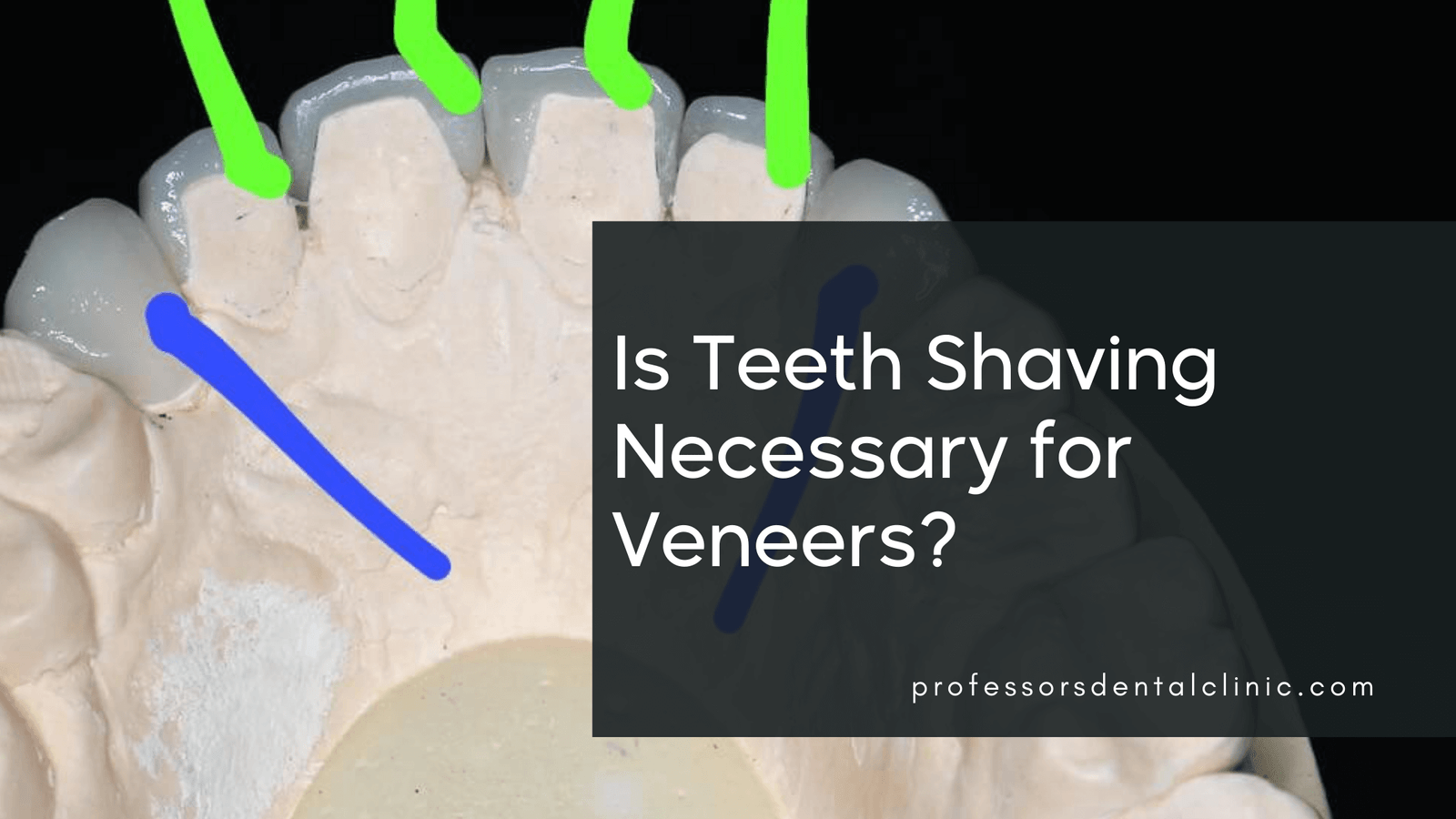
You’ve probably seen those perfectly aligned, dazzling white smiles on social media and wondered how they achieved them. The truth? In many cases, it’s through dental veneers. But here’s what most people don’t tell you upfront: getting veneers usually requires some tooth preparation – or as it’s commonly called, “teeth shaving.”
As a cosmetic dentist specializing in prosthodontics with years of experience creating smile transformations, I want to give you the honest, complete picture of what happens when you decide to get veneers.
Is Teeth Shaving for Veneers Necessary?
Let me paint you a picture. Imagine trying to add a new layer of paint to a wall without removing the old, bumpy surface first. The result wouldn’t be smooth or natural-looking, right? The same principle applies to veneers.
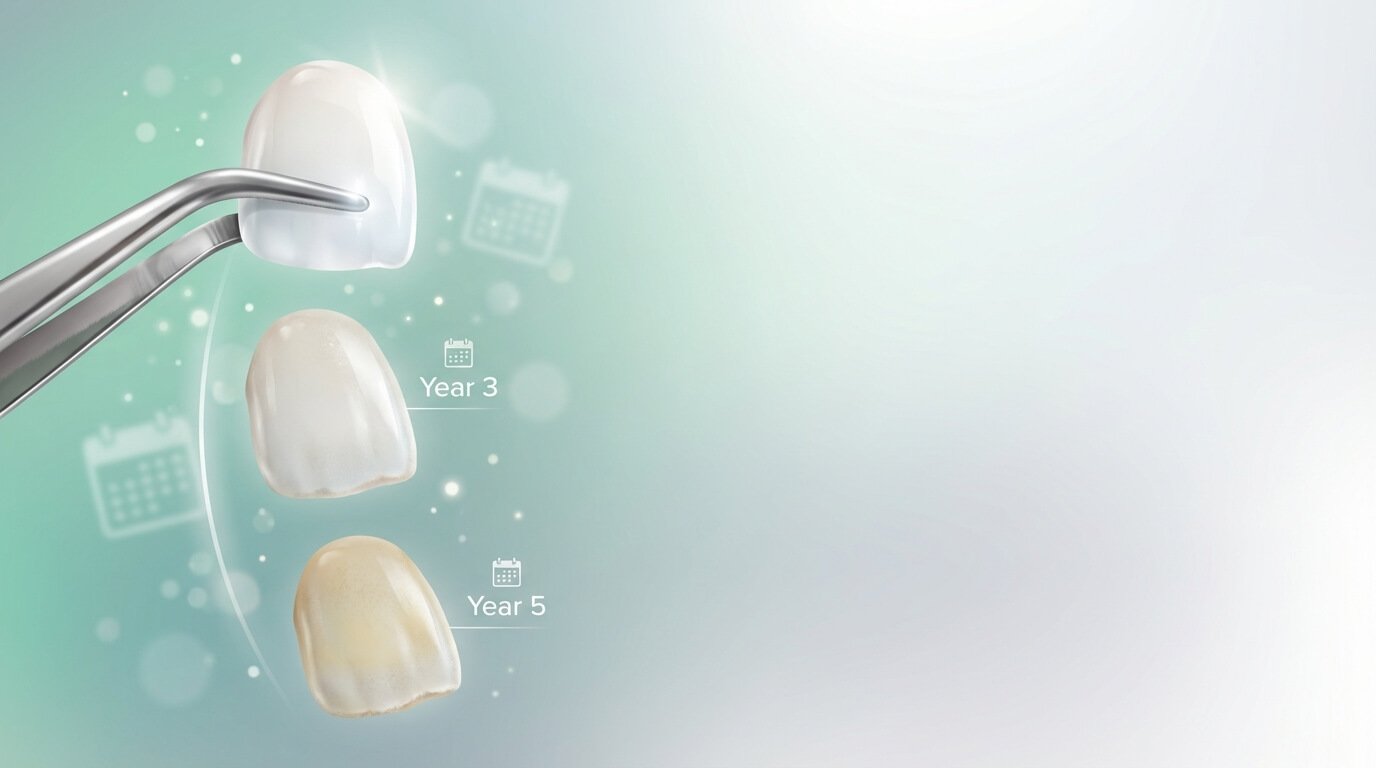
Veneers are thin shells, typically between 0.5 and 0.7 millimeters thick, that bond to the front surface of your teeth. Without any preparation, placing them directly on your existing teeth would make them look bulky, unnatural, and feel uncomfortable in your mouth.
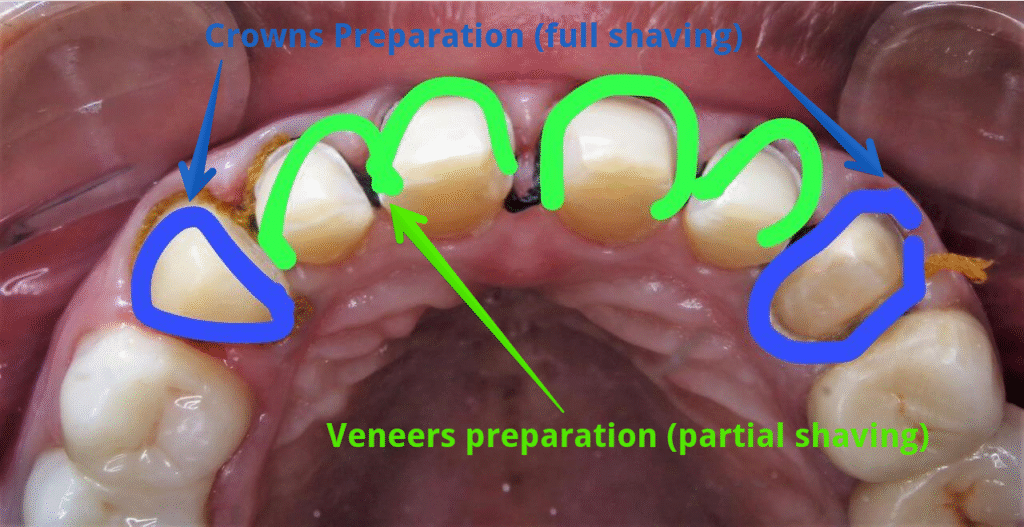
Tooth preparation serves several crucial purposes:
- Creates space for the veneer material without making teeth appear oversized
- Ensures proper alignment with surrounding teeth and opposing bite
- Removes any old fillings, decay, or imperfections
- Provides a better bonding surface for long-lasting adhesion
- Allows for optimal light reflection, giving teeth a natural translucent quality
⚠️ The Truth About “No-Prep” Veneers & Lumineers
When researching veneers, you will likely come across heavily marketed terms like “no-prep veneers” or “Lumineers.” The commercial promise is incredibly appealing to patients: a brand-new smile with absolutely no teeth shaving required.
However, as dental professionals, we must issue a strong warning regarding this commercial hype. While no-prep veneers are heavily advertised, they are very rarely the right clinical choice.
Because these veneers are placed directly over your natural teeth without removing any enamel to make room for them, they inherently add extra thickness. If your teeth are already average-sized, slightly crowded, or protruding, adding a no-prep veneer will result in a bulky, unnatural, “horse-teeth” appearance. Even worse, this added bulk creates an overhang at the gumline that traps plaque, frequently leading to chronic gum inflammation and disease.
The Reality in Numbers: While Lumineers are available, they only yield beautiful, natural results under extremely strict conditions. To put it in perspective, out of 1,000 cosmetic veneer cases, only 1 or 2 patients will actually be ideal candidates for a true no-prep approach.
No-prep veneers only work for specific scenarios, such as:
- Patients with abnormally small teeth (Microdontia).
- Teeth that are slanted deeply inwards and need volume built outward.
- Smiles with significant gaps where teeth need to be widened without any reduction.
For the vast majority of patients seeking a seamless, natural-looking, and long-lasting smile, conservative and precise tooth shaving is not just recommended—it is required.
Our clinic has over 700 positive reviews on Google ⭐⭐⭐⭐⭐ You can send us a WhatsApp message to book a checkup or enquire about any of our dental services.
How Much Tooth Structure Is Actually Removed?
This is the question I hear most often in my clinic, and I understand the concern. After all, we’re talking about your natural teeth.
For veneers made from materials like E.max®, we typically remove approximately 0.5 to 0.7 millimeters of enamel from the front surface of the tooth. To put this in perspective, that’s about the thickness of a fingernail or two sheets of paper stacked together.
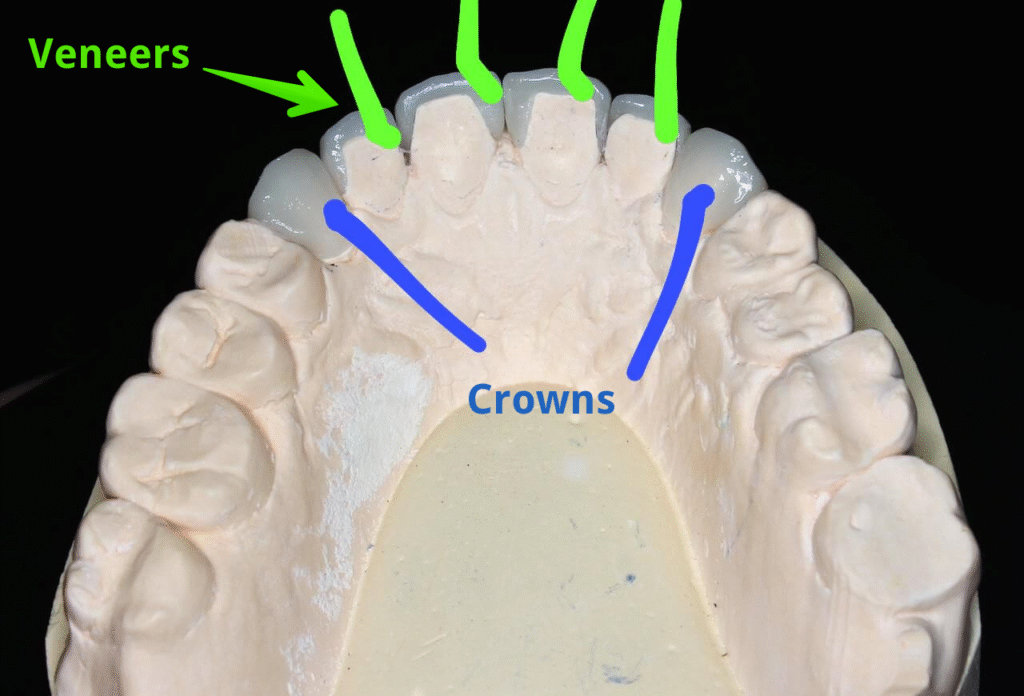
The green arrows in the image above show exactly where and how teeth are prepared. Notice how the preparation is:
- Conservative and limited to the front surface
- Designed to maintain tooth structure while creating adequate space
- Carefully contoured to follow the natural tooth anatomy
At Professors Dental Clinic, we use precision instruments and magnification to ensure we remove only what’s absolutely necessary – nothing more.
📖 Readers Also Liked: Can I have veneers while having gum recession?
What Does the Veneer Preparation Process Actually Feel Like?
One of our patients recently told us she’d been putting off veneers for two years because she was terrified of the preparation process. After her procedure, she wished she’d done it sooner because it was “nothing like what I’d imagined.”
Here’s what you can actually expect:
Before the procedure:
- We’ll take detailed impressions and photographs of your teeth
- Together, we’ll discuss your desired outcome, including shape and color
- We’ll create a digital smile design or temporary mockup so you can preview your new smile
During tooth preparation:
- Local anesthesia ensures you feel absolutely no pain
- The process typically takes 1-2 hours for a full set of veneers
- You might feel slight pressure or vibration, but no discomfort
- We use water cooling throughout to prevent any sensitivity
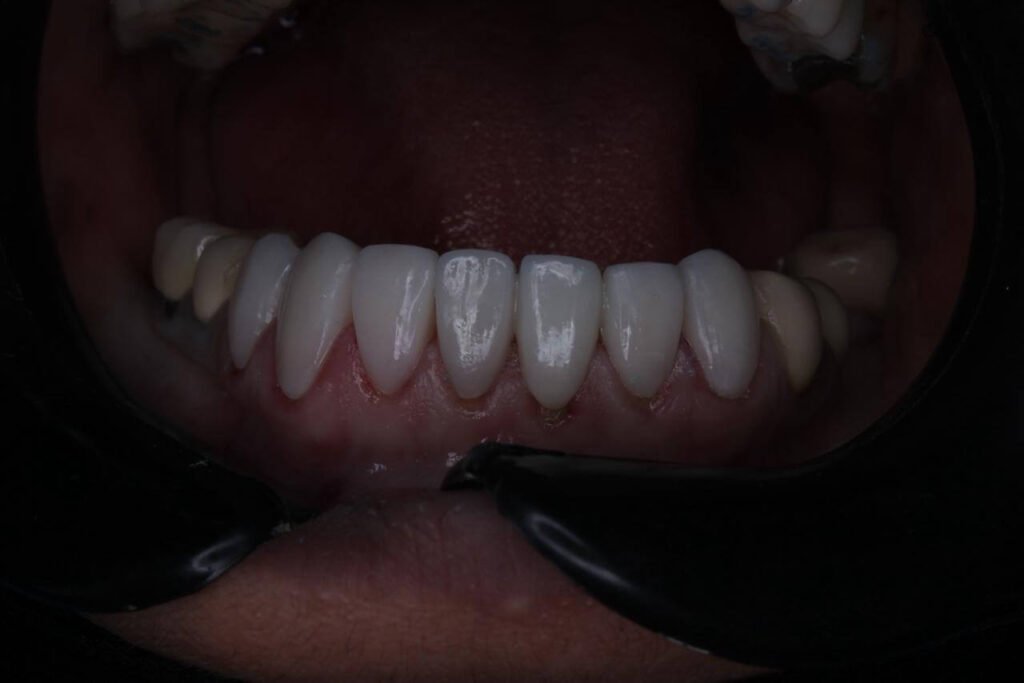
After preparation:
- Temporary veneers protect your teeth while your permanent ones are crafted
- These temporaries also let you “test drive” the shape and appearance
- Any sensitivity usually subsides within a few days
- You can eat normally, though we recommend avoiding very hard or sticky foods
At Professors Dental Clinic, I place special emphasis on this temporary phase. The temporary veneers we provide aren’t just protective, they’re a precise preview of your final result. This allows us to make any adjustments to shape or color before creating your permanent veneers, ensuring you’re absolutely thrilled with the outcome.
Free Preview — No Commitment
See your new smile before touching a single tooth
At Professors Dental Clinic, we design your smile digitally first — so you know exactly what you’re getting before any preparation begins.
Is the Tooth Preparation Permanent?
Yes, and this is something I want you to fully understand before making your decision.
Once enamel is removed, it doesn’t grow back. This means that once your teeth are prepared for veneers, you’ll need to maintain them with either veneers or alternative restorations for life.
However, “for life” doesn’t mean forever wearing the same set. The original Swiss E.max® veneers we use at our clinic are incredibly durable, typically lasting 10-15 years or even longer with proper care. When they eventually need replacement, we can often re-veneer the same prepared tooth without additional reduction.
Think of it as a long-term commitment to maintaining your smile, much like other aspects of dental health.
📖 Readers Also Liked: The pros and cons of E.max® veneers
Different Types of Veneers and Their Preparation Requirements
Not all veneers require the same amount of tooth preparation. Let me break down your options:
Porcelain Veneers (E.max®):
- Preparation: 0.3-0.5mm of enamel removal
- Durability: 10-15+ years
- Appearance: Most natural, highly stain-resistant
- Best for: Comprehensive smile makeovers, long-term solution
At Professors Dental Clinic, we exclusively use the original Swiss E.max® brand, not cheaper Chinese alternatives. These premium veneers offer superior strength, translucency, and color stability. Each veneer is priced at 7,500 EGP (approximately $159) and comes with a 10-year warranty, reflecting our confidence in both the material and our craftsmanship. In fact, Egypt is one of the best countries for veneers in terms of quality, expertise, and value for money.
Composite Veneers:
- Preparation: Minimal to none (0.1-0.3mm)
- Durability: 4-7 years
- Appearance: Good, but more prone to staining
- Best for: Budget-conscious patients, quick improvements
- Price: Approximately $85 per tooth, completed in one session
These are sculpted directly onto your teeth using tooth-colored resin. While they don’t offer the same longevity or stain resistance as porcelain, they can provide an excellent aesthetic result with minimal tooth preparation. However, they don’t come with a warranty due to their material properties.
📖 Readers Also Liked: The pros and cons of E.max® veneers
Making the Right Decision for Your Smile
Getting veneers and accepting the tooth preparation that comes with them is a significant decision. I never want patients to feel rushed or pressured.
During your consultation at Professors Dental Clinic, we’ll discuss:
- Your specific dental concerns and aesthetic goals
- Whether veneers are the best solution or if alternatives might work better
- Exactly how much preparation your teeth would require
- What you can expect during and after the procedure
- A transparent breakdown of costs and timeline
Ready to see what your smile could look like?
Whether you’re still weighing your options or ready to book, our team at Professors Dental Clinic is here to walk you through every step — from digital smile design to final placement.
Remember, the goal isn’t just to give you white teeth, it’s to create a natural, beautiful smile that enhances your confidence and lasts for years to come.
The tooth preparation required for veneers isn’t something to fear, but rather a necessary step in a transformative process. When done correctly by an experienced cosmetic dentist using premium materials, it’s an investment in a smile you’ll love showing off.